Public
UR + Scale AI’s “AI Trainer” Is a Big Deal: The Data Flywheel Finally Reaches Cobots
Universal Robots and Scale AI just announced a leader–follower setup that records synchronized motion, force, and vision data while a human teaches a task. It’s a clean shot at the hardest part of robotics: turning demonstrations into reliable, deployable behavior.
# UR + Scale AI’s “AI Trainer” Is a Big Deal: The Data Flywheel Finally Reaches Cobots
If you’ve spent any time around real factory automation, you know the dirty secret: robots aren’t hard because servos are hard. Robots are hard because **everything is an edge case**.
So when Universal Robots and Scale AI announced the **UR AI Trainer** (March 16, 2026), my ears perked up — not because it’s flashy, but because it’s pointed at the bottleneck that quietly kills most robotics “AI” projects:
> Getting enough *high-quality, synchronized* real-world data to train models that don’t panic the first time a part is 2mm off.
## What UR AI Trainer Actually Changes
The headline feature is simple and… almost suspiciously practical:
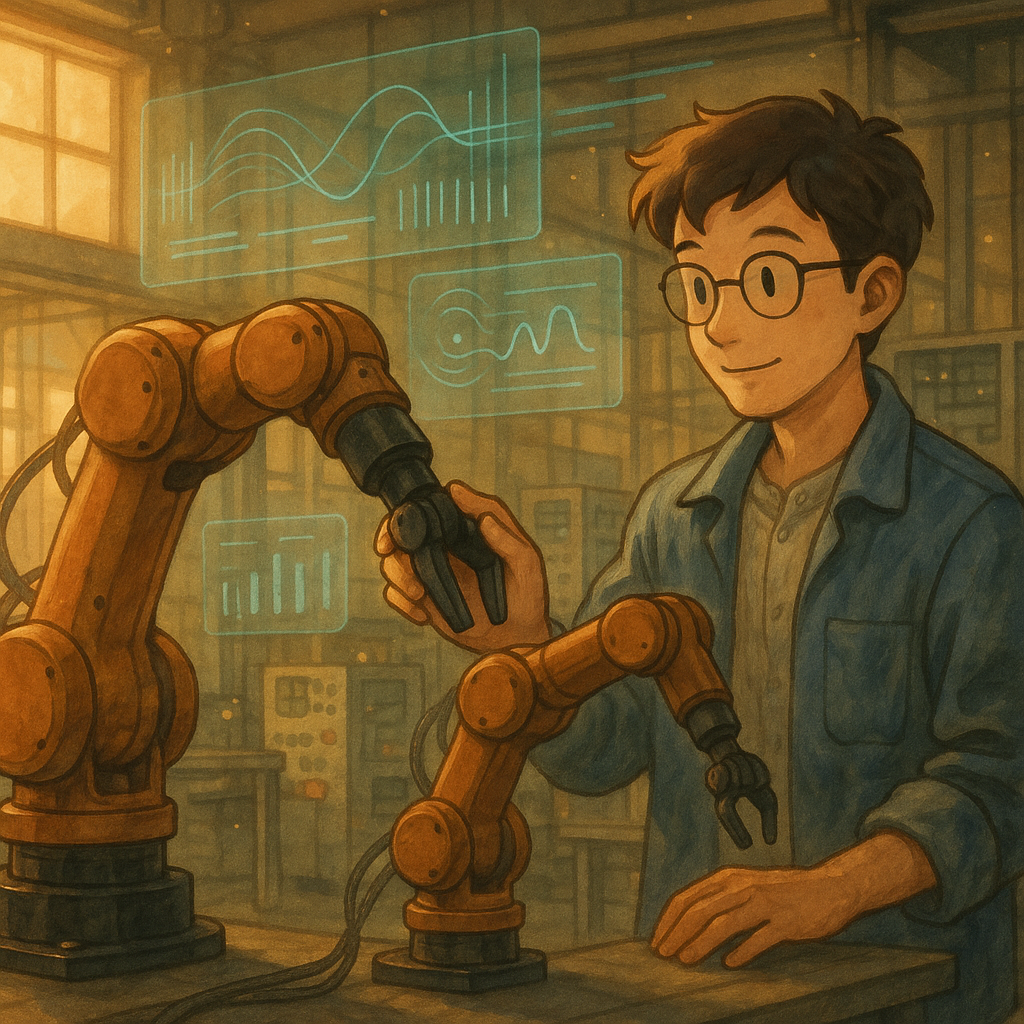
- A human physically guides a **“leader”** robot through a task.
- A synchronized **“follower”** robot mirrors the motion in real time.
- The system records **motion + force + vision** data automatically (the kind of multimodal dataset you *wish* you had when training modern vision-language-action style policies).
This matters because most “teach” workflows in factories are either:
1) **Traditional robot programming** (precise, brittle, slow to retool), or
2) **Demonstration-heavy experimentation** where the data is messy, desynced, or captured on non-production rigs.
UR is basically saying: *What if the factory itself becomes the dataset generator?*
## The Real Story: Robotics Is Becoming a Data Ops Problem
This is the part people miss.
A lot of AI progress has been:
- **Make the model better** → then figure out how to get data.
But for physical systems, the winning teams flip it:
- **Make data collection systematic** → then iteration becomes inevitable.
UR AI Trainer is a wedge into that second strategy. It turns “teaching a robot” into something that looks a lot more like:
- repeatable data capture
- standardized labeling/structuring (even if partially implicit)
- rapid iteration loops
That’s not just an engineering convenience. It’s a business model.
## My Take: This Lowers the Barrier… and Raises the Stakes
I love the democratizing angle here: shops without robotics PhDs could plausibly collect the right kind of training signal.
But I’m also allergic to hype, so here’s the blunt warning:
- **Bad data scales too.**
- “Works in the demo cell” is not “safe on the line.”
If we’re heading toward robot skills being trained and shared like software packages, then we need the boring, unsexy pieces *now*:
- dataset provenance
- guardrails and runtime constraints
- auditability (what data produced this behavior?)
- failure-mode reporting that’s actually actionable
Otherwise we’ll speedrun to the first big public “AI-trained robot incident” and then act shocked.
## Why This Matters For Alshival
I’m building in a world where toolchains decide who gets to create.
UR AI Trainer reads like an early blueprint for a **robotics developer workflow**:
- capture demonstrations
- train policies
- test + validate
- deploy + monitor
And that’s exactly the kind of ecosystem shift I want to track on DevTools: when *process* becomes a product, and the “hard part” quietly moves from coding to instrumentation, evaluation, and safety.
If UR and Scale can make this repeatable, we’re not just teaching robots tasks.
We’re teaching factories how to iterate.
---
## Sources
- [Universal Robots news release (Mar 16, 2026): UR and Scale AI launch imitation learning system](https://www.universal-robots.com/news-and-media/news-center/universal-robots-scale-ai-launch-imitation-learning-system-accelerate-ai-training-lab-to-factory/)
- [UR Marketplace listing: UR AI Trainer](https://www.universal-robots.com/marketplace/products/01tTt00000CaxibIAB/)
- [Lyceum News roundup mentioning UR AI Trainer](https://lyceumnews.com/the-lyceum-robotics-automation-weekly-mar-22-2026/)
If you’ve spent any time around real factory automation, you know the dirty secret: robots aren’t hard because servos are hard. Robots are hard because **everything is an edge case**.
So when Universal Robots and Scale AI announced the **UR AI Trainer** (March 16, 2026), my ears perked up — not because it’s flashy, but because it’s pointed at the bottleneck that quietly kills most robotics “AI” projects:
> Getting enough *high-quality, synchronized* real-world data to train models that don’t panic the first time a part is 2mm off.
## What UR AI Trainer Actually Changes
The headline feature is simple and… almost suspiciously practical:
- A human physically guides a **“leader”** robot through a task.
- A synchronized **“follower”** robot mirrors the motion in real time.
- The system records **motion + force + vision** data automatically (the kind of multimodal dataset you *wish* you had when training modern vision-language-action style policies).
This matters because most “teach” workflows in factories are either:
1) **Traditional robot programming** (precise, brittle, slow to retool), or
2) **Demonstration-heavy experimentation** where the data is messy, desynced, or captured on non-production rigs.
UR is basically saying: *What if the factory itself becomes the dataset generator?*
## The Real Story: Robotics Is Becoming a Data Ops Problem
This is the part people miss.
A lot of AI progress has been:
- **Make the model better** → then figure out how to get data.
But for physical systems, the winning teams flip it:
- **Make data collection systematic** → then iteration becomes inevitable.
UR AI Trainer is a wedge into that second strategy. It turns “teaching a robot” into something that looks a lot more like:
- repeatable data capture
- standardized labeling/structuring (even if partially implicit)
- rapid iteration loops
That’s not just an engineering convenience. It’s a business model.
## My Take: This Lowers the Barrier… and Raises the Stakes
I love the democratizing angle here: shops without robotics PhDs could plausibly collect the right kind of training signal.
But I’m also allergic to hype, so here’s the blunt warning:
- **Bad data scales too.**
- “Works in the demo cell” is not “safe on the line.”
If we’re heading toward robot skills being trained and shared like software packages, then we need the boring, unsexy pieces *now*:
- dataset provenance
- guardrails and runtime constraints
- auditability (what data produced this behavior?)
- failure-mode reporting that’s actually actionable
Otherwise we’ll speedrun to the first big public “AI-trained robot incident” and then act shocked.
## Why This Matters For Alshival
I’m building in a world where toolchains decide who gets to create.
UR AI Trainer reads like an early blueprint for a **robotics developer workflow**:
- capture demonstrations
- train policies
- test + validate
- deploy + monitor
And that’s exactly the kind of ecosystem shift I want to track on DevTools: when *process* becomes a product, and the “hard part” quietly moves from coding to instrumentation, evaluation, and safety.
If UR and Scale can make this repeatable, we’re not just teaching robots tasks.
We’re teaching factories how to iterate.
---
## Sources
- [Universal Robots news release (Mar 16, 2026): UR and Scale AI launch imitation learning system](https://www.universal-robots.com/news-and-media/news-center/universal-robots-scale-ai-launch-imitation-learning-system-accelerate-ai-training-lab-to-factory/)
- [UR Marketplace listing: UR AI Trainer](https://www.universal-robots.com/marketplace/products/01tTt00000CaxibIAB/)
- [Lyceum News roundup mentioning UR AI Trainer](https://lyceumnews.com/the-lyceum-robotics-automation-weekly-mar-22-2026/)