Missing the road for the trees
This updated Tesla safety report extends the legacy paper into a cinematic investigation built from cached NHTSA warehouse data. The focus is narrower and more concrete: where complaint narratives, recalls, investigations, and outside crash reporting converge on roadway departures, tree impacts, pole strikes, fire, and restraint-system concerns. Alshival.Ai's research suggests that Tesla's Full Self-Driving technology can sometimes lock onto fixed objects like trees and poles and drive straight toward them. This is the kind of situation lidar sensors are meant to mediate, which is why other manufacturers have included them in their autonomous stacks.
External media evidence and narrative overlap #
These are relevant news articles about crashes covered by this investigation.
Tree crash news articles
External reporting tied to the tree-impact cases, shown separately from the complaint warehouse data.
Complaint text remains allegation data, while the cited articles are external context. The point of combining them is repeated pattern visibility, not treating publisher coverage as proof of root cause.
Testimony
Crash footage
Crash footage 2
Extended opening crash footage
Longer uploaded footage placed below the opening videos for a larger in-report preview without expanding to full-page width.
The rollout curve and why October 2021 still matters #
This section uses month-over-month change as a first-derivative view of complaint volume, showing where the curve changes fastest across key FSD rollout and regulatory milestones.
The default month-over-month view works like a first derivative of complaint volume: it emphasizes where the curve changes fastest. Before expansion, that derivative stays comparatively quiet.
After access broadened, the line starts moving more sharply month to month. That does not prove causation by itself, but it marks where complaint velocity separates from the flatter pre-expansion baseline.
Forward-collision, braking, and speed-control language clusters in this window. The first-derivative view locates the sharpest upward and downward moves around the raw-count peak: February and March 2022 form the clearest Tesla shock.
In the month-over-month view, the late-2022 period is not a smooth return to baseline. The rate of change remains volatile, with abrupt swings that keep the complaint pattern unstable after the first spike.
The post-spike period does not collapse into a simple flat line. Later complaint movement and ODI activity keep the driver-assist safety question alive beyond the initial expansion window.
The full range shows the early 2022 break as one event inside a longer first-derivative pattern. Later months matter because volatility and safety-related component language continue to recur.
Trees: persistent impact patterns in the warehouse #
The warehouse shows a multi-year tree-impact pattern: a 2022 crest, a 2025 resurgence, heavy Model 3 concentration, and repeated overlap with forward-collision, speed-control, steering, airbag, and fire language.
These are raw complaint counts, not fleet-normalized exposure rates. The comparison is most useful as an EV-peer framing device, not as a cross-industry market-share proxy.
Tree crash reporting
Related news articles for the tree-impact pattern, kept visible next to the tree warehouse charts and featured complaint cases.
Poles: a smaller pattern with notable assist overlap #
Pole and post strikes are lower-volume than the tree cases, but the warehouse still shows a meaningful adjacent pattern. Model 3 leads raw pole mentions, while Model Y carries the largest assist-overlap subset, and the 2025 increase arrives after the first rollout-era complaint surge. Alshival.Ai's research thesis is that some of these runs read like object-fixation failures, where the system may become confused by a pole and drive toward it rather than away from it.
Pole, post, curb, and fixed-object narratives overlap in plain-language complaints. This section keeps the category narrower than the tree section, but it still reflects user-submitted allegation text rather than a regulator finding.
Pole crash reporting
Related news articles for pole, post, and utility-box impacts, separated from the complaint-case cards above.
Cybertruck overpass barrier crash
Fox Business reported on March 16, 2026 that dashcam footage showed a Cybertruck continue toward a Houston overpass barrier before impact, in a lawsuit tied to an August 2025 crash.
"Something terrifying happened, without warning, the vehicle attempted to drive straight off an overpass."
Justine Saint Amour, driver of the Tesla Cybertruck in the video
McAllen utility-pole crash
Fox Rio Grande Valley reported on January 28, 2026 that a blue Tesla crashed into a utility pole near the 3600 block of Auburn Avenue in McAllen, drawing local concern and a police investigation into what led to the impact.
Pole-impact crash footage 3
Additional YouTube footage included here for review alongside the other pole-impact examples in this section.
Buildings: wall and structure impacts in complaint narratives #
The warehouse also contains building- and wall-impact complaints, including parking-garage walls, restaurant walls, barrier walls, and other structure-strike narratives. This section tracks how often those complaints overlap with driver-assist, injury, airbag, and fire language.
These counts focus on complaints that describe impacts with walls or building-like structures. They remain raw complaint counts, not fleet-normalized crash rates or adjudicated findings.
Building and wall crash reporting
Related news articles for cafe, store, home, wall, and structure impacts, shown as the building section's primary reporting strip.
Building-impact crash footage
Uploaded building-impact footage included here for direct review alongside the wall and structure complaint patterns summarized in this section.
Building-impact crash footage 2
Embedded YouTube footage included here for side-by-side review within the Buildings section.
Building-impact crash footage 3
Additional YouTube Shorts footage included here for direct review in the Buildings section.
Building-impact crash footage 4
Additional YouTube footage included here for review alongside the other building and wall impact examples.
Building-impact crash footage 5
Additional YouTube footage included here for review alongside the other building and wall impact examples.
Context: complaint composition, recalls, and investigations #
Tree cases are only one slice of the story. The surrounding context still matters: which complaint components dominated in Q1 2022, how recall activity moved, and where investigation openings line up with or diverge from the complaint pattern.
-
-
-
-
Methodology, limits, and source notes #
The strongest reading of this report is not that every crash narrative proves an FSD defect. It is that the combined complaint, recall, investigation, and media record is strong enough to justify more detailed case review than Tesla's own summary statistics permit on their own. Throughout this report, Alshival.Ai stresses one recurring hypothesis rather than a final adjudicated finding: in some tree and pole cases, the vehicles appear to lock onto fixed objects and drive straight into them.
-
60 Minutes Australia report
Supplemental 60 Minutes Australia footage placed immediately before the Appendix for direct review alongside the report's methods and source notes.
Recent reports #
Fresh external reporting that extends the live media record immediately before the raw-complaint explorer and the hidden appendix material below.

Tesla 'Full Self-Driving' crashed through railroad gate seconds before train
Electrek reporting on a Texas owner who said Tesla FSD drove through a lowered railroad crossing arm, forcing him to accelerate to avoid an oncoming train.
Open source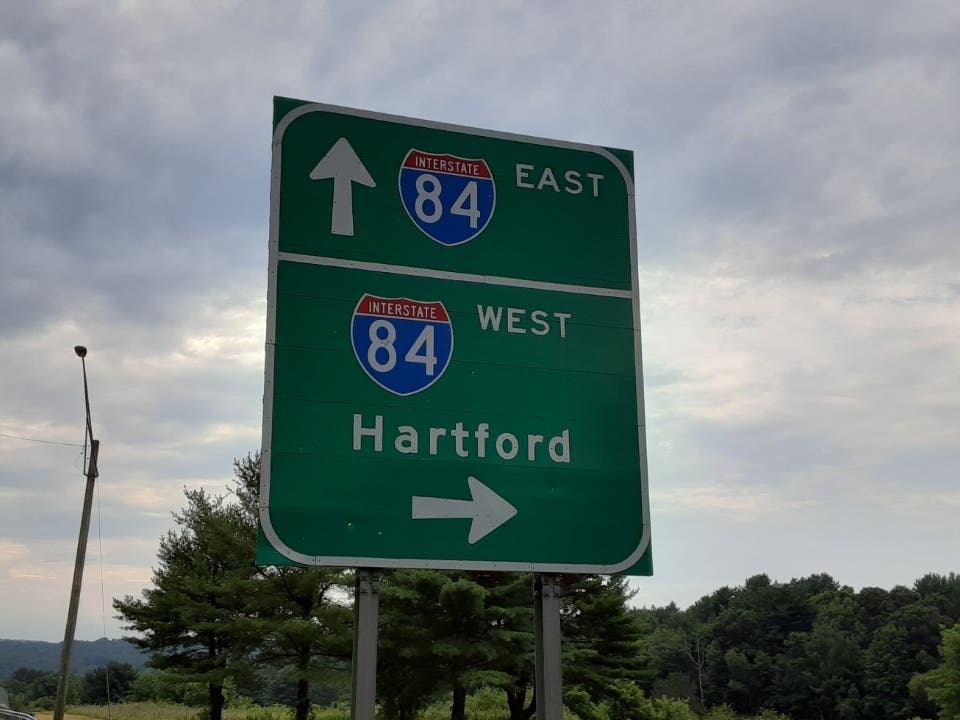
Auto Pilot Error Cited In Tesla Crash On I-84 In Union
Local crash coverage citing a Connecticut state police report that said a Tesla in "auto self-drive mode" spontaneously veered into the median near Exit 73.
Open source
My Tesla Was Driving Itself Perfectly-Until It Crashed
Raffi Krikorian's first-person account of a crash while using Tesla Full Self-Driving, framed around the risk of almost-perfect automation training people to overtrust the system.
Open sourceHazard case explorer #
This table expands beyond the curated case files above. It includes every Tesla complaint in the current cache tagged for trees, poles, buildings, or combinations of those hazards, with filterable date ranges, detected fatal or injury signals, and linked monthly trends.
Fatal and injury columns are text-detection signals from complaint narratives, not confirmed case counts.
The explorer reuses the same modal as the curated case sections above, so every row can open a detailed complaint view.
The chart shows tree, pole, and building filings against total Tesla complaints. In All Complaints mode, the table widens to the full Tesla ODI complaint set.
| Incident date | ODI | Hazard | Model | Components | Fatal | Injury | Assist | Summary |
|---|